Nam accumsan, augue vel commodo pharetra, nisi justo vestibulum lectus, eget condimentum nibh sem id felis. In quis sem in neque maximus ornare. Vestibulum laoreet ac magna ac gravida. Vivamus pellentesque pretium metus, sed rutrum leo fermentum ac. Phasellus efficitur tempus neque, at convallis leo hendrerit vitae. Ut varius ante elit, et posuere risus consequat sed. Etiam nec blandit augue. Maecenas ac feugiat lorem. Ut ornare egestas pellentesque. Donec ac efficitur felis. Nunc ac egestas odio. Vivamus mi felis, sollicitudin in iaculis at, finibus eget eros. Sed blandit massa eu nibh commodo, id lobortis eros ultricies. Sed interdum nulla mattis ultricies vestibulum. Donec id nulla eros.
For boarding school students, and many teachers, the campus is home. Explore dormitory living, get expert advice on learning and living away from home and learn more about what can be done to help your child transition to and succeed in boarding school. Find resources for parents, teachers and students. We’ll cover sustainability, boarding school jargon, and corporal punishment. Read first-hand accounts from parents of boarding school students, find graduation gift ideas, and learn why small classes are effective.
View the most popular articles in School Life:
Academics: International Baccalaureate & Advanced Placement

We compare and contrast the International Baccalaureate Diploma Programme and Advanced Placement. We also explore their distinct educational philosophies, curriculum structures, assessment methods, and global recognition to help students and parents make informed decisions about which rigorous academic program best suits their educational goals and learning preferences.
Academics: International Baccalaureate & Advanced Placement
The International Baccalaureate Diploma Programme (IBDP) and Advanced Placement (AP) are two prestigious academic curricula found in boarding schools offering rigorous college-preparation academics. While both programs offer significant benefits and have similar aims, they differ substantially in structure, philosophy, and the way they present their subject material. In this article, we'll examine these differences in order to help you make informed decisions about which program works best for you.
The International Baccalaureate Diploma Programme
The International Baccalaureate Diploma Programme is a comprehensive two-year curriculum designed for students aged 16-19. Established with a global perspective, the IBDP aims to develop students who excel not only intellectually but also physically, emotionally, and ethically.
Established in 1968, the International Baccalaureate® (IB) Diploma Programme (DP) was the first programme offered by the IB and is taught to students aged 16-19. Source: IB.org
Teacher Training and Lesson Planning
One of the questions to ask when you are researching schools is what training, certifications, and experience their IB or AP teachers have.
Teacher Training International Baccalaureate (IB)
To teach IB courses, teachers typically need specialized training and certification.
- The International Baccalaureate Organization offers various levels of certification, including the IB Certificate in Teaching and Learning, which requires completing a recognized program of study.
- For higher-level certifications, such as the IB Advanced Certificate in Teaching and Learning Research, teachers must have at least three years of IB
. . .read more
Education Beyond the Classroom: The Role of Outdoor Adventure in Shaping Young Minds
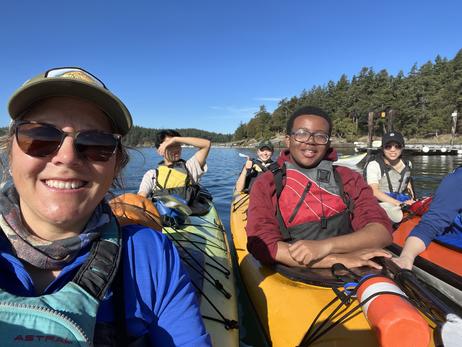
The concept of outdoor education dates back to the early 20th century as educators sought ways to engage students beyond traditional methods. Early efforts initially focused on direct, experiential learning in nature, but later evolved to incorporate academics, collaborative skills, and a focus on environmental responsibility. Outdoor education today equips students with critical life skills, preparing them for the world beyond the classroom.
Annie Wright Schools
Education Beyond the Classroom: The Role of Outdoor Adventure in Shaping Young Minds
By Betta Hanson, GOAT Co-Director & Residential Faculty at Annie Wright Schools
In a time when screens and schedules dominate our daily lives, outdoor education programs are redefining how students learn and grow.
- By blending academic learning with real-world outdoor experiences, these programs effectively foster resilience, leadership abilities, and a deeper connection to nature.
- The concept of outdoor education dates back to the early 20th century as educators sought ways to engage students beyond traditional methods.
- Early efforts initially focused on direct, experiential learning in nature but later evolved to incorporate academics, collaborative skills, and a focus on environmental responsibility.
- Outdoor education today equips students with critical life skills, preparing them for the world beyond the classroom.
This video offers an overview of Annie Wright Schools.
Why Outdoor Education Matters
Outdoor education provides benefits beyond the immediate thrill of adventure.
- Students develop important skills such as resilience, leadership, and environmental stewardship by participating in activities that push their physical, emotional, and intellectual limits.
- The impact of outdoor education goes far beyond the surface.
- It promotes curiosity and creativity, encouraging students to approach problems from various angles.
Outdoor education also builds a sense of community and collaboration.
- Whether summiting a peak together or navigating a kayak through uncharted waters, students learn to communicate effectively, trust one another, and work toward shared
. . .read more
How I Made Latin One of the Most Popular Classes

Discover the fascinating journey of how Latin became one of the most popular classes in my school. Join me as I share my experiences, strategies, and insights from my years of teaching Latin, and making it an engaging and sought-after subject for students.
I applied to teach at a private school in The Bahamas some years ago. During my interview, the head of school noted that I had a degree in Latin and Greek from McGill University. She exclaimed that she had always wanted her students to learn Latin. I looked at her, somewhat puzzled, and asked why she wanted Latin as part of her school's curriculum; she opined that it would help their SAT scores. I remember being skeptical about this claim, but I was more concerned about what the parents would think about having their children study a dead language. So, the head of the school called a meeting of the parents to discuss her proposed addition of Latin to the curriculum. Many parents expressed their concerns, but the head of the school was compelling in her arguments. As a result, I began teaching Latin to students in Grades 5 through 9.
Selecting a Curriculum
My next challenge, of course, was to select a Latin curriculum. Several courses were available, but I chose the Cambridge Latin Course. It enjoyed a good reputation. It was also very well laid out and organized. I made these choices in the 90s, so we were looking at the first or second edition of that particular curriculum. That was back when there was no such thing as a digital edition. Nowadays, the Cambridge Latin Course has a digital edition and a host of resources available on their website.
. . .read more
Emerging Challenges for Boarding Schools

Explore the pressing challenges facing boarding schools, from marketing difficulties and rising insurance costs to facility maintenance and recruitment of competent trustees and teachers. This article delves into these complex issues and proposes innovative strategies to overcome them.
Emerging Challenges for Boarding Schools
In the vast and evolving educational landscape, boarding schools have stood as beacons of tradition, discipline, and academic rigor.
- These institutions not only provide quality education but also foster personal development, independence, and resilience in students.
- However, boarding schools are currently navigating a complex maze of challenges.
- The obstacles are multifaceted, from marketing difficulties and rising insurance costs to facility maintenance and recruitment of competent trustees and teachers.
This article aims to delve into these challenges and suggest potential solutions.
_facade_of_Dollar_Academy.jpg)
Marketing Challenges
Historically, boarding schools thrived on word-of-mouth marketing and their reputations for producing well-rounded, academically accomplished students.
- However, shifting societal norms, increased competition, and the rise of digital media have disrupted these traditional strategies.
- Boarding schools now face the challenge of attracting a diverse student body, both domestically and internationally, while also addressing concerns about the value of the boarding school experience.
To overcome these challenges, schools need to adopt personalized admissions processes that highlight the unique benefits of their institution.
- Furthermore, leveraging digital marketing strategies, such as social media and content marketing, can extend their reach to prospective students and parents.
- Crucially, boarding schools must work to create unique selling propositions that distinguish them from their competition and resonate with today's discerning families.
This video offers suggestions for marketing your school.
Rising
. . .read more
Recent Articles

When a Boarding School Scholarship Comes With Conditions: Questions to Ask Before Accepting
Learn what boarding school scholarship conditions mean, how renewal requirements work, and the questions every family should ask before accepting an award.

The Boarding School Net Price Test: What to Compare After Financial Aid Offers Arrive
Learn how to compare boarding school financial aid offers, calculate true net cost, and identify hidden expenses before making your enrollment decision.

Building Your Boarding School Shortlist: A Data-Driven Approach
Learn how to compare boarding schools using a data-driven approach that helps families build a smarter, more personalized shortlist.