
Why Boarding School

The decision to attend boarding school is not an easy one. While the quality of resources, activities, and academics offered by boarding schools may be found in local schooling options, boarding schools offer a unique set of benefits and experiences. Our informative articles cover the history of boarding schools in the US, explore the varied types of schools, and provide an overview on why boarding school can be an excellent educational option for your child. Learn more about issues affecting international students, identify some of the oldest and most prestigious boarding schools in the US, and review expert advice on making the right choice.

View the most popular articles in Why Boarding School:

Boarding School Sustainability and Green Campus Planning

Updated
|
Boarding School Sustainability and Green Campus Planning
Explore boarding school sustainability initiatives and green campus planning, shaping eco-conscious education in 2026.

Boarding school sustainability initiatives and green campus planning are becoming central to how institutions design their campuses, deliver education, and prepare students for a changing world. As environmental concerns continue to shape global priorities in 2026, many boarding schools are aligning their operations and curricula with sustainability goals.

Unlike day schools, boarding schools operate as fully residential communities. This creates both challenges and opportunities. Energy use, food systems, transportation, and building design must all be managed on campus, but these same systems can serve as living laboratories for sustainability education.

For families evaluating boarding school options, understanding how schools approach environmental responsibility offers insight into both campus culture and long-term institutional values.

Why Sustainability Matters in Boarding Schools

Sustainability in education is no longer limited to classroom discussions about climate science. It increasingly involves operational decisions and campus-wide commitments.

Boarding schools are uniquely positioned to lead in this area because they manage:

  • Housing and dining services
  • Extensive physical campuses
  • Year-round resource consumption
  • Student behavior and community norms

According to the U.S. Environmental Protection Agency, schools that adopt sustainable practices can significantly reduce energy consumption and operational costs while improving student health and engagement.

In a residential setting, these benefits are amplified. Students see the direct impact of sustainability practices on their daily lives, from energy use in dormitories to food sourcing in dining halls.

Core Elements of Green Campus Planning

Green campus planning involves a comprehensive approach to designing and managing school environments with environmental impact in mind. Leading boarding schools

. . .read more

International Student Visa Trends & Boarding Schools

Updated
|
International Student Visa Trends & Boarding Schools
Explore how international student visa trends are shaping boarding school enrollment in 2026 and what families should know.

International student visa trends are playing an increasingly important role in shaping boarding school enrollment decisions in 2026. For families considering U.S. or other international boarding schools, visa policies are no longer a background concern. They directly influence application timing, school selection, and long-term academic planning.

Over the past two years, shifting immigration policies, post-pandemic processing backlogs, and geopolitical factors have created a more complex landscape for international students. Boarding schools, which have historically relied on a globally diverse student body, are adapting their admissions strategies while families must navigate new requirements with greater care.

This article examines the most important visa trends affecting boarding school enrollment, how schools are responding, and what prospective families should consider.

The Role of International Students in Boarding Schools

Boarding schools have long emphasized global diversity as a core component of their educational model. Students from different countries bring varied perspectives, enriching classroom discussions and residential life.

As outlined in foundational discussions of boarding education, exposure to diverse cultures is one of the defining benefits of boarding school environments. International students contribute significantly to that diversity, often representing dozens of countries within a single campus.

Families exploring these advantages may also find helpful context in https://www.boardingschoolreview.com/blog/why-boarding-school, which explains how global exposure shapes student development.

However, this global composition depends heavily on stable and accessible visa systems. When those systems shift, enrollment patterns follow.

Key Visa Trends Since 2024

Several developments over the past 24 months have influenced international boarding enrollment.

. . .read more

Boarding School Residential Life Models Explained

Updated
|
Boarding School Residential Life Models Explained
Explore boarding school residential life models, supervision, and mentorship systems shaping student growth and community living.

Boarding school residential life models play a central role in shaping the student experience, often defining how young people grow academically, socially, and personally. While families frequently focus on academics and college placement, the structure of residential life deserves equal attention. The way students live, interact, and receive guidance outside the classroom can significantly influence their independence, well-being, and long-term success.

At its core, a boarding school is not simply about where students sleep. It is an immersive environment where supervision structures and mentorship systems create a continuous learning experience. As highlighted in foundational discussions of boarding education, the residential setting itself becomes an extension of the classroom, fostering responsibility, resilience, and community engagement.

Understanding how different schools design their residential programs helps families make informed decisions and align expectations with their child’s needs.

What Are Boarding School Residential Life Models?

Residential life models refer to how a boarding school organizes student housing, supervision, and daily living structures. These models determine:

  • Where and how students live
  • Who supervises them
  • How support systems are delivered
  • The level of independence students experience

Families beginning their search may also benefit from reviewing broader guidance on choosing a school environment at https://www.boardingschoolreview.com/blog/why-boarding-school.

Common Residential Life Models

Model Description Best Fit For
Traditional Dormitory Large dorms with multiple students per floor and shared spaces Students who enjoy social, active environments
House System Smaller, family-style houses with mixed ages Students seeking close-knit communities
Faculty-in-Residence Teachers live in dorms and supervise daily life Students who benefit from strong adult mentorship
Prefect or Student Leadership Model Senior students help oversee
. . .read more

Military Boarding Schools Guide for Parents (2026)

Updated
|
Military Boarding Schools Guide for Parents (2026)
Explore military boarding schools in 2026. Learn benefits, structure, costs, and how to choose the right program for your child.

Military boarding schools continue to attract families seeking structure, discipline, and leadership development in a residential academic setting. While often misunderstood as rigid or punitive environments, today’s military boarding schools offer a balanced education that combines academics, character development, and personal growth.

This updated Military Boarding Schools Guide explains how these institutions work, who they serve best, and what families should consider when evaluating options in 2026.

What Is a Military Boarding School?

A military boarding school is a college-preparatory institution that integrates military-style structure into daily student life. Students, often referred to as cadets, follow a regimented schedule that includes academics, physical training, leadership exercises, and community responsibilities.

Unlike traditional boarding schools, these programs emphasize:

  • Chain-of-command leadership models
  • Uniforms and inspections
  • Physical fitness and discipline
  • Character development and accountability

However, most military boarding schools are not affiliated with the armed forces and do not require students to pursue military careers.

Who Should Consider a Military Boarding School?

Military boarding schools are not one-size-fits-all. They are best suited for students who benefit from clear expectations and structured environments.

Ideal candidates include:

  • Students needing improved focus or discipline
  • Teens interested in leadership development
  • Students aiming for service academies or ROTC programs
  • Learners who thrive with routine and accountability

Families considering alternatives to traditional education paths may also find value in exploring therapeutic boarding schools or junior boarding schools, depending on the student’s needs.

Key Features of Military Boarding Schools

While each institution differs, most military boarding schools

. . .read more

How Boarding Schools Are Adapting Post-Pandemic in 2026

Updated
|
How Boarding Schools Are Adapting Post-Pandemic in 2026
Explore how boarding schools are adapting to post-pandemic education in 2026, from hybrid learning to student wellness and campus innovation.

How Boarding Schools Are Adapting to Post-Pandemic Education

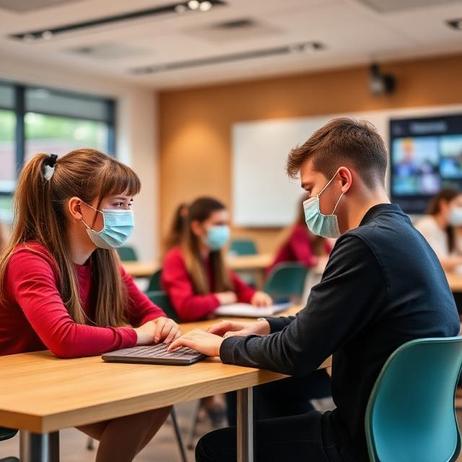
The conversation around how boarding schools are adapting to post-pandemic education has shifted significantly since 2020. What began as an emergency response has evolved into a long-term transformation of teaching, learning, and student life. In 2026, boarding schools are not simply recovering from disruption, they are redefining what a residential education looks like in a more flexible, health-conscious, and technology-driven world.

For families exploring options on Boarding School Review, understanding how boarding schools are adapting to post-pandemic education is essential. Today’s schools are blending academic rigor with resilience, prioritizing student well-being, and embracing innovation in ways that will shape the next generation of graduates.

A Shift Toward Hybrid and Flexible Learning

One of the most visible ways boarding schools are adapting to post-pandemic education is through hybrid learning models. While fully remote instruction is no longer the norm, the infrastructure built during the pandemic remains in place.

Many schools now offer:

  • Recorded lectures for review and reinforcement

  • Virtual office hours for additional academic support

  • Digital collaboration tools integrated into daily coursework

  • Contingency plans for temporary remote learning during disruptions

This flexibility benefits not only students who may face illness or travel constraints but also those who learn best at their own pace.

According to research from the U.S. Department of Education, schools that maintained blended learning environments saw improved student engagement and continuity during disruptions. Boarding schools have taken this insight further by embedding digital tools

. . .read more

Recent Articles

When a Boarding School Scholarship Comes With Conditions: Questions to Ask Before Accepting
Learn what boarding school scholarship conditions mean, how renewal requirements work, and the questions every family should ask before accepting an award.
The Boarding School Net Price Test: What to Compare After Financial Aid Offers Arrive
Learn how to compare boarding school financial aid offers, calculate true net cost, and identify hidden expenses before making your enrollment decision.
Building Your Boarding School Shortlist: A Data-Driven Approach
Learn how to compare boarding schools using a data-driven approach that helps families build a smarter, more personalized shortlist.

Featured Schools

Featured Schools

Why Boarding School

ABOUT BOARDING SCHOOLS
Here you’ll find basic information on boarding schools and why they may be the best choice for your child. Get answers to some of the most frequently asked questions, dispel boarding school myths, and learn what separates a boarding school from other private school options.
KINDS OF SCHOOLS
There are several types of boarding schools, each offering a unique set of experiences. The articles in this section will provide more information on college preparatory, junior and therapeutic boarding schools. Here you will explore the pros and cons of single sex education, learn the truth about military schools and identify schools with programs for learning disabled students.
INTERNATIONAL STUDENTS
US Boarding schools attract students from all over the world. International students often face a unique set of challenges. This section will cover topics relevant to global students. From English immersion to preparing for entry into a US college or university, we’ll provide helpful tips and resources to help international students make informed decisions.
HISTORY
This section provides a comprehensive look at the history of boarding schools in the US. We’ll cover the evolution of private schools, as learn the importance of school mottoes and explore the history of 15 schools and their founders.
BOARDING SCHOOL ISSUES
We’ll keep you informed about the most important issues facing boarding schools today. From student life to rising tuition costs, you’ll find the latest information on the most important problems affecting boarding schools and the students that attend them.
SCHOOL LIFE
For boarding school students, the campus is home. Explore dormitory living, get expert advice on learning and living away from home and learn more about what can be done to help your child transition to and succeed in boarding school.