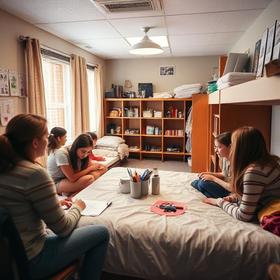
For Parents

This section covers issues and concerns for parents of boarding school students. Explore corporal punishment, get expert advice on preventing hazing, and read first-hand accounts from parents. Learn what to do if things go wrong, see what boarding school students do in the summer, and get words of wisdom from a reluctant parent.

View the most popular articles in For Parents:

Why Choose a Boarding Summer Program

Updated
|
Why Choose a Boarding Summer Program
Explore how boarding school summer programs work in 2026, including academics, dorm life, safety, activities, and what parents should expect.

Most boarding schools offer summer programs running for about two weeks. If your child needs help with a subject like math, for instance, she will be able to find it. Ditto with enrichment. Summer boarding programs offer a special opportunity to sample a variety of subjects in a residential setting away from home.

Behind the scenes

Boarding schools run professionally staffed fully insured and properly licensed programs. They have been doing it for years. They understand how to supervise young people. That's because they do it all year long.

The teachers are generally drawn from the school's academic team, with adjunct faculty added as necessary for special programs. The support staff, including kitchen and security professionals, are usually the same team you will find on duty when school is in session. All these professionals have passed background checks.

Boarding schools have found that summer programs make good use of facilities that would otherwise be idle for several months over the long summer vacation. They have also learned that summer programs provide an agreeable soft introduction to the concept of going away to boarding school. Many parents send their children to a boarding school summer program to see how they will like it. Next thing they know, their son or daughter is asking if they can go to that wonderful boarding school.

What about the amenities?

Are meals provided? What are the meals like? Most schools offer three meals a day. Snacks are also available. Boarding schools know how

. . .read more

What's the Food Like?

Updated
|
What's the Food Like?
Your child will have many questions about the food and much more at boarding school. Here is one way to handle those inevitable questions and concerns.

Sending your child off to boarding school raises all sorts of important questions for your child. After all, she is a teenager. Leaving home is a major step for kids going off to college, much less a kid going off in ninth or tenth grade to boarding school. And those college kids are four and five years older than she is. So be patient and proactive. Anticipate her questions and concerns. What I strongly recommend is that you try to think about what your child's questions and concerns will be. You know her like the back of your hand anyway.

Almost all the schools on your shortlist will have websites that can answer most of her questions. For answers to her remaining or more detailed questions, email the admissions offices. They will be very happy to help.

So, what's the food like? Food is important to teenagers. As it should be. Truth is that boarding schools have dealt with teenagers for years. They understand the kind of nutrition growing bodies need. Indeed teaching students about nutrition is something boarding schools have baked into their programs.

Here is an example of what I mean from the website for St. Timothy's School, Stevenson, Maryland.

Great food and excellent service are the hallmarks of Dining Services at St. Timothy’s School. We meet the wide range of tastes and meal preferences of our student body with healthy, varied, and wholesome meals. Many items are made from scratch, and homemade pastries

. . .read more

What Happens When.....

Updated
|
What Happens When.....
From homesickness and financial aid to academic struggles and school transfers, learn how to handle 15 common boarding school situations in 2026.

This article offers answers to some of the more common concerns we parents have when our child goes off to boarding school. Most, but not all, of these questions and their answers come from my own personal experience.

While some admissions policies and educational practices have evolved since this article was originally written, the concerns parents face remain remarkably similar. Whether your child is applying to boarding school, currently enrolled, or preparing to graduate, understanding how schools typically respond to these situations can help you navigate challenges with greater confidence.

1. What Happens If Your Child Is Expelled?

Expulsion is a big deal.

You will have much explaining to do when applying to another private school. It may just be that you will have to send your child to public school for the rest of the academic year while you try to find a new school willing to take her.

I have always taken the view that it is how we handle failure which is the true measure of our character. Shall we learn from our mistakes and become the success we know we can be? Or do we blame others and retreat from reality?

Most schools today place considerable emphasis on restorative practices, counseling, and intervention before situations reach the point of expulsion. However, serious violations involving safety, substance abuse, academic dishonesty, or repeated disciplinary issues can still lead to dismissal.

I suspect some counseling for you and your child might also be helpful.

2. What Happens
. . .read more

Corporal Punishment is Still Legal in Many States

Updated
|
Corporal Punishment is Still Legal in Many States
As amazing as it sounds, corporal punishment is still legal in over 20 states. Fortunately private schools banned the practice many decades ago.

Do you realize that there are still nineteen states in which corporal punishment of students is still allowed? Merriam-Webster defines corporal punishment as "punishment that involves hitting someone: physical punishment." Yes, it is legal to discipline students by hitting them in states in the South, the Southwest, and Midwest, including Alabama, Arizona, Arkansas, Colorado, Florida, Georgia, Idaho, Indiana, Iowa, Kansas, Kentucky, Louisiana, Mississippi, Missouri, North Carolina, South Carolina, Tennessee, Texas, and Wyoming. It is legal to paddle students with a wooden paddle; while it was much worse ten or twenty years ago, it is appalling that in the 21st century, the wealthiest nation in the world still has nineteen states that permit a child to be spanked by an adult in a classroom. Corporal punishment has no place in schools.

Fortunately, I know no boarding school anywhere in North America permits hitting students. Period. Technically, New Jersey and Iowa are the only states where corporate punishment is forbidden in private schools. But our boarding schools, indeed our private schools as a whole, are enlightened exemplars of all that is good in education. Our private school Codes of Discipline and Conduct do not allow any form of physical abuse. For all kinds of good reasons. Most importantly, our boarding schools understand what is required to create a better world. In this world, children can mature into productive adults who are competent and confident in achieving whatever their dreams are. Corporal punishment is not part of

. . .read more

What Is Your Child Doing This Summer?

Updated
|
What Is Your Child Doing This Summer?
Explore the best summer options for students in 2026, including day camps, overnight camps, summer school, specialty programs, and educational travel.

When I was a youngster, sometime around Victoria Day weekend, my parents moved the family out to a cottage near the village of Chateauguay on the banks of Lac St. Louis. We were there until Labor Day. (In those days, school opened after Labor Day.) My brothers, sister, and I enjoyed swimming and sailing lessons, the occasional dance as we got older, and the usual organized summer activities. Dad worked in Montreal and came out to the cottage in the evenings. Mother stayed at home and supervised us.

When we were bringing up our daughters, it was a bit trickier. We both worked. We had to find things for them to do, both to keep them occupied and to keep them from getting into mischief. A trip, a keyboarding course, and even some tutoring helped make those long summer days in Connecticut move along at a good clip.

Nowadays, depending on where you live and the plans you have for your child's education, you have a variety of options to choose from. Let's look at some of them.

Day Camp

Basically, the idea behind a day camp is that you drop your children off in the morning and pick them up in the afternoon. The routine is similar to what you had when school was in session. The advantage to a day camp is that it is usually a local operation. If you are lucky enough to have an established day camp in your area and your children

. . .read more

Recent Articles

When a Boarding School Scholarship Comes With Conditions: Questions to Ask Before Accepting
Learn what boarding school scholarship conditions mean, how renewal requirements work, and the questions every family should ask before accepting an award.
The Boarding School Net Price Test: What to Compare After Financial Aid Offers Arrive
Learn how to compare boarding school financial aid offers, calculate true net cost, and identify hidden expenses before making your enrollment decision.
Building Your Boarding School Shortlist: A Data-Driven Approach
Learn how to compare boarding schools using a data-driven approach that helps families build a smarter, more personalized shortlist.